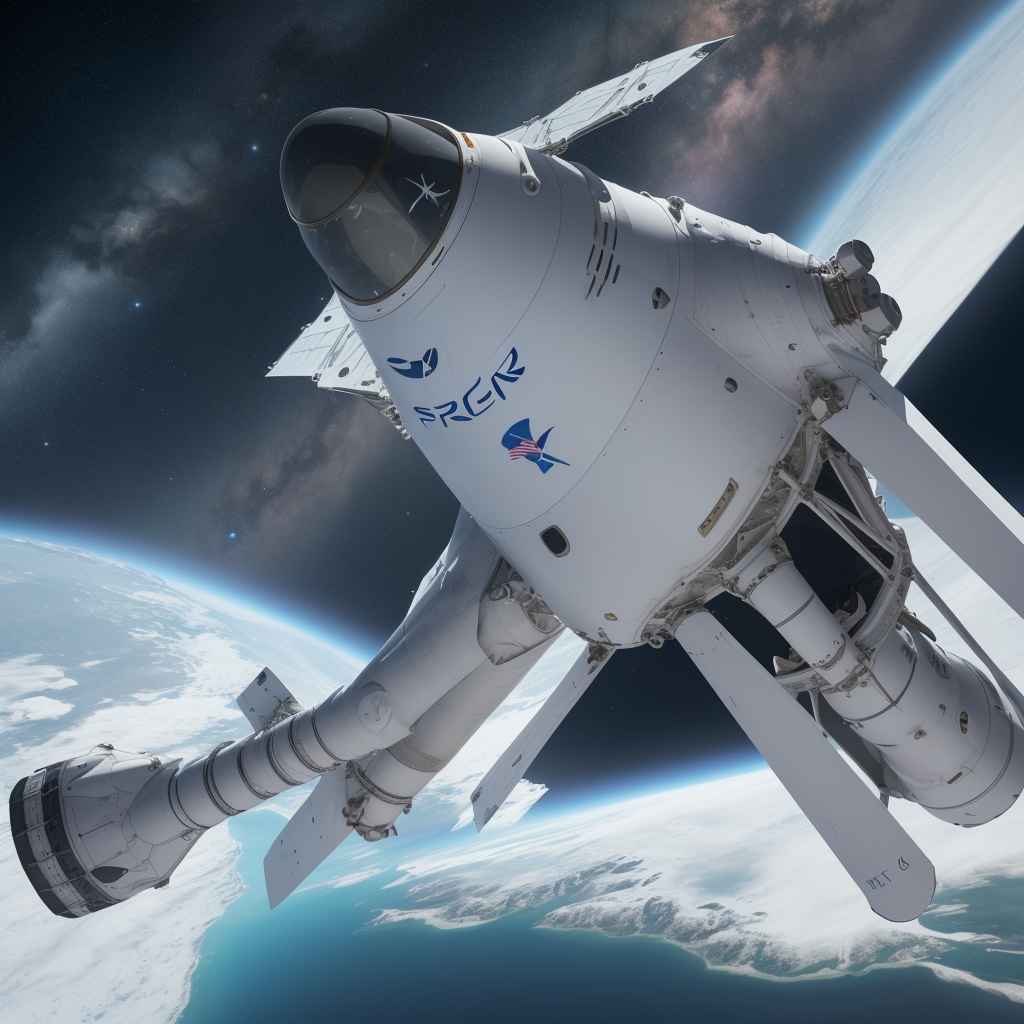
Cosmic Quest Unfolds with Cryptocurrency Backing
SpaceX Set to Launch Polar Spaceflight Funded by Crypto Investor
Mumbai: Elon Musk's SpaceX is set to launch its next-generation satellite, Polar, into space, with a unique funding model. The company has secured funding from a crypto investor, marking a significant milestone in the convergence of space exploration and cryptocurrency.
Polar, a high-resolution Earth observation satellite, is designed to provide detailed images of the planet's surface, with a focus on polar regions. The satellite is expected to be launched on a Falcon 9 rocket from Cape Canaveral, Florida, in the coming weeks.
The funding for the Polar project comes from a crypto investor, who has chosen to remain anonymous. The investor, who has a significant stake in the cryptocurrency market, has reportedly invested millions of dollars in the project.
This is not the first time that the space industry has received funding from the cryptocurrency market. In recent years, several space companies have received investment from crypto investors, marking a significant shift in the way that space exploration is funded.
The Polar project is a significant step forward for SpaceX, which has been at the forefront of innovation in the space industry. The company has already achieved several milestones, including the successful launch of its Falcon Heavy rocket and the deployment of its Starlink satellite constellation.
The Polar satellite is expected to provide detailed images of the Earth's surface, with a focus on polar regions. The satellite will be equipped with a high-resolution camera, which will capture images of the Earth's surface at a resolution of up to 30 centimeters.
The launch of the Polar satellite is expected to be a significant milestone in the development of the space industry, marking a new era of cooperation between the space and cryptocurrency industries. The project is expected to provide valuable insights into the Earth's surface, which will be used to monitor climate change, track natural disasters, and improve our understanding of the planet.