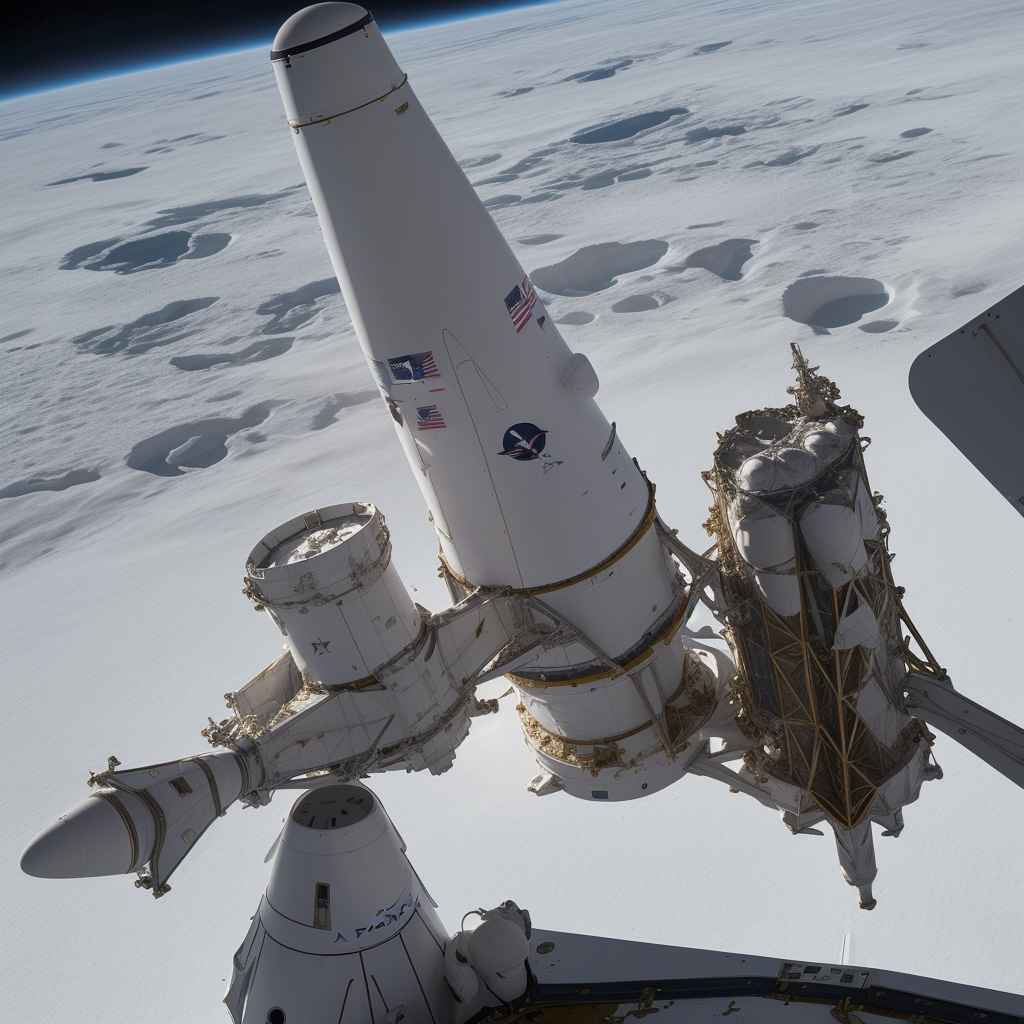
SpaceX Ventures into the Polar Regions with Fram2, the First Crewed Spaceflight to Explore Earth's Extremes
Title: NASA's Perseverance Rover Discovers Evidence of Ancient Lake on Mars
NASA's Perseverance rover has made a groundbreaking discovery on Mars, uncovering evidence of an ancient lake that once existed on the planet's surface. The finding is significant because it suggests that Mars may have once been capable of supporting life, and that the planet's environment may have been more hospitable to life in the past than previously thought.
According to NASA, the Perseverance rover discovered the evidence of the ancient lake while exploring a region of Mars known as Jezero Crater. The crater was once home to a lake that was about 45 kilometers in diameter and 300 meters deep. The lake was likely formed millions of years ago, when Mars had a thicker atmosphere and was warmer than it is today.
The discovery was made using a combination of data from the Perseverance rover's instruments and observations from NASA's Mars Reconnaissance Orbiter. The rover's Alpha Particle X-Ray Spectrometer (APXS) instrument was used to analyze the chemical composition of the Martian soil and rocks, while the Mars Reconnaissance Orbiter's High Resolution Imaging Science Experiment (HiRISE) camera was used to create detailed images of the Martian surface.
The evidence of the ancient lake was found in the form of sedimentary rocks and minerals that are similar to those found in lakebeds on Earth. The rocks and minerals were formed through the process of sedimentation, in which particles settle out of a liquid, such as water, over time. The presence of these rocks and minerals suggests that the Martian lake was likely a calm and peaceful environment, rather than a turbulent and violent one.
The discovery of the ancient lake on Mars is significant because it provides evidence that the planet may have once been capable of supporting life. The finding also suggests that the environment on Mars may have been more hospitable to life in the past than it is today, which could have implications for the search for life on the planet.
NASA's Perseverance rover is continuing to explore Jezero Crater and the surrounding area, and it is expected to provide more insights into the history of Mars and the possibility of life on the planet.